

Have you ever wondered why healthcare providers recommend specific needle sizes for hormone injections? While it may seem like a small detail, needle gauges for testosterone replacement therapy play a crucial role in ensuring accurate dosing, medication consistency, and overall treatment success.
Choosing the correct equipment is not simply a matter of convenience. It directly affects how much medication is delivered, how consistently hormones are absorbed, and whether patients receive the exact therapeutic dose prescribed.
Purpose of Dosing Accuracy and Needle Gauges for TRT
Testosterone replacement therapy requires precise dosing to maintain stable hormone levels and achieve optimal clinical outcomes. Even small variations in injection technique can affect how much medication actually enters the body.
The selection of needle gauges for testosterone replacement therapy is therefore not arbitrary but based on clinical considerations of dosing accuracy, medication waste, and patient safety. Proper needle selection helps ensure that each injection delivers the intended therapeutic amount.
Understanding Patient Requests
Many patients request larger needles because they allow testosterone oil to be drawn into the syringe more quickly. Testosterone solutions are often suspended in thicker carrier oils, which can make drawing medication slower with smaller needles.
However, the convenience of larger needle gauges for testosterone replacement therapy often comes at the cost of dosing precision. While drawing medication may be faster, larger needles can introduce mechanical issues that affect how much medication remains inside the syringe and needle after injection.
The Science of Dosing Accuracy
When administering injectable medications, the dose delivered is influenced by more than the amount drawn into the syringe barrel. A key factor is the volume of medication that remains trapped in the needle and syringe hub after the injection is complete.

This phenomenon becomes particularly important when evaluating needle gauges for testosterone replacement therapy. Larger needles tend to have a greater internal volume, meaning more medication can remain in the hub and fail to reach the patient.
Over time, these small discrepancies can accumulate and lead to inconsistent hormone levels.
The Role of Dead Space in Syringes
Dead space refers to the small amount of medication that remains inside the syringe tip and needle after an injection has been completed. Even though the syringe appears empty, a measurable amount of fluid may still remain inside.
Understanding dead space is essential when selecting needle gauges for testosterone replacement therapy because larger needles typically retain more residual medication. This means the actual dose delivered may be lower than the amount drawn.
In therapies that rely on precise hormone balance, even minor dosing inconsistencies can lead to fluctuations in testosterone levels.
Needle Gauge Comparison
Needle gauge refers to the diameter of the needle opening. A smaller gauge number indicates a larger needle, while a larger gauge number indicates a thinner needle.
In clinical practice, smaller-diameter needle gauges for testosterone replacement therapy are often preferred because they reduce medication loss and improve dosing consistency. Although drawing TRT medication may take slightly longer, the benefit is greater accuracy in the final delivered dose.
Thinner needles also tend to cause less injection discomfort for many patients.
Clinical Consequences of Inaccuracy
Inaccurate dosing can lead to several clinical complications. If patients receive less medication than prescribed, testosterone levels may remain below the desired therapeutic range.
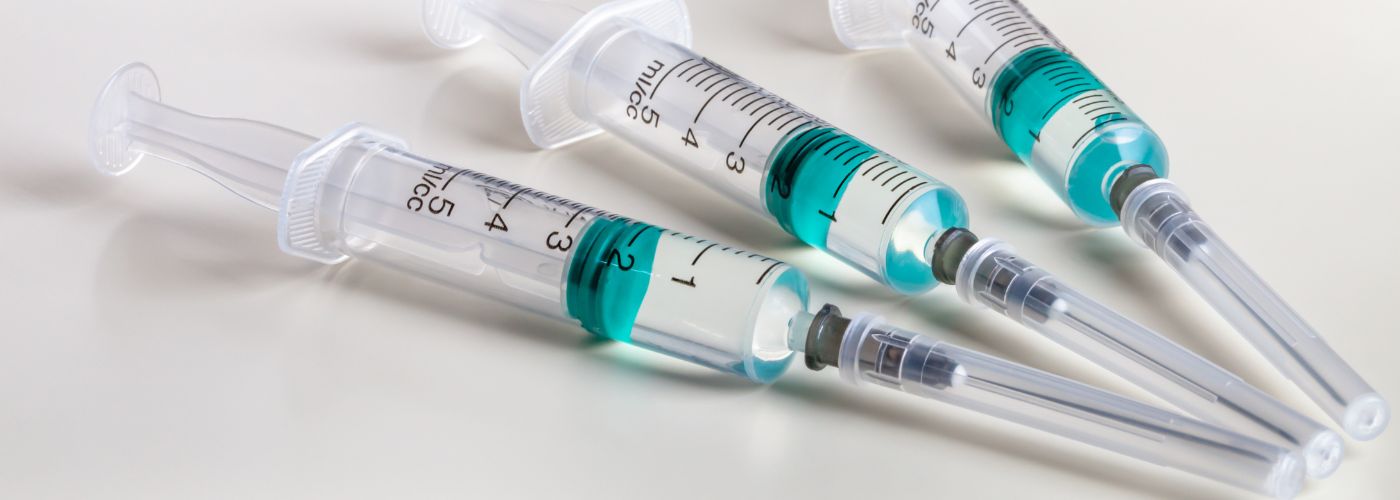
Improper use of needle gauges for testosterone replacement therapy can therefore contribute to hormonal instability, fluctuating symptoms, and difficulty maintaining consistent treatment outcomes.
In other cases, patients may attempt to compensate for perceived medication loss by drawing more medication than prescribed.
This can lead to unintended overdosing and hormone imbalances.
Our Standard Protocol
To maintain consistency and accuracy, many clinical protocols recommend smaller needle sizes when administering testosterone injections.
Standard protocols for needle gauges for testosterone replacement therapy typically prioritize dosing accuracy over draw speed. Techniques such as injecting air into the vial before drawing medication and warming the vial slightly can help reduce viscosity and make the process smoother.
These methods allow patients to draw medication efficiently while still maintaining precise dosing.
Commitment to Patient Safety
Testosterone therapy requires careful monitoring and adherence to prescribed protocols. Accurate dosing ensures that patients receive the full therapeutic benefit of treatment while minimizing risks.
The careful selection of needle gauges for testosterone replacement therapy reflects a commitment to both patient safety and treatment precision.
By following recommended injection techniques and equipment guidelines, patients can maintain stable hormone levels and achieve consistent clinical results.
When dosing accuracy is prioritized, testosterone therapy becomes more predictable, more effective, and ultimately safer for long-term management.